Studio
Making Textile Art: Repetition and a Work in Progress
There is a particular stage in making that interests me: the point at which a work has begun to take form, but has not yet settled into its final state. Materials are still being tested, associations remain unresolved and decisions can change the direction of the work. I think of this stage not as something separate from the finished artwork, but as an essential part of the practice itself.
My work moves between textile, drawing and sculpture. This movement means that a work does not always begin with a predetermined form. A material, a technique, an image or a question can become the starting point, and the work develops through the process of making.
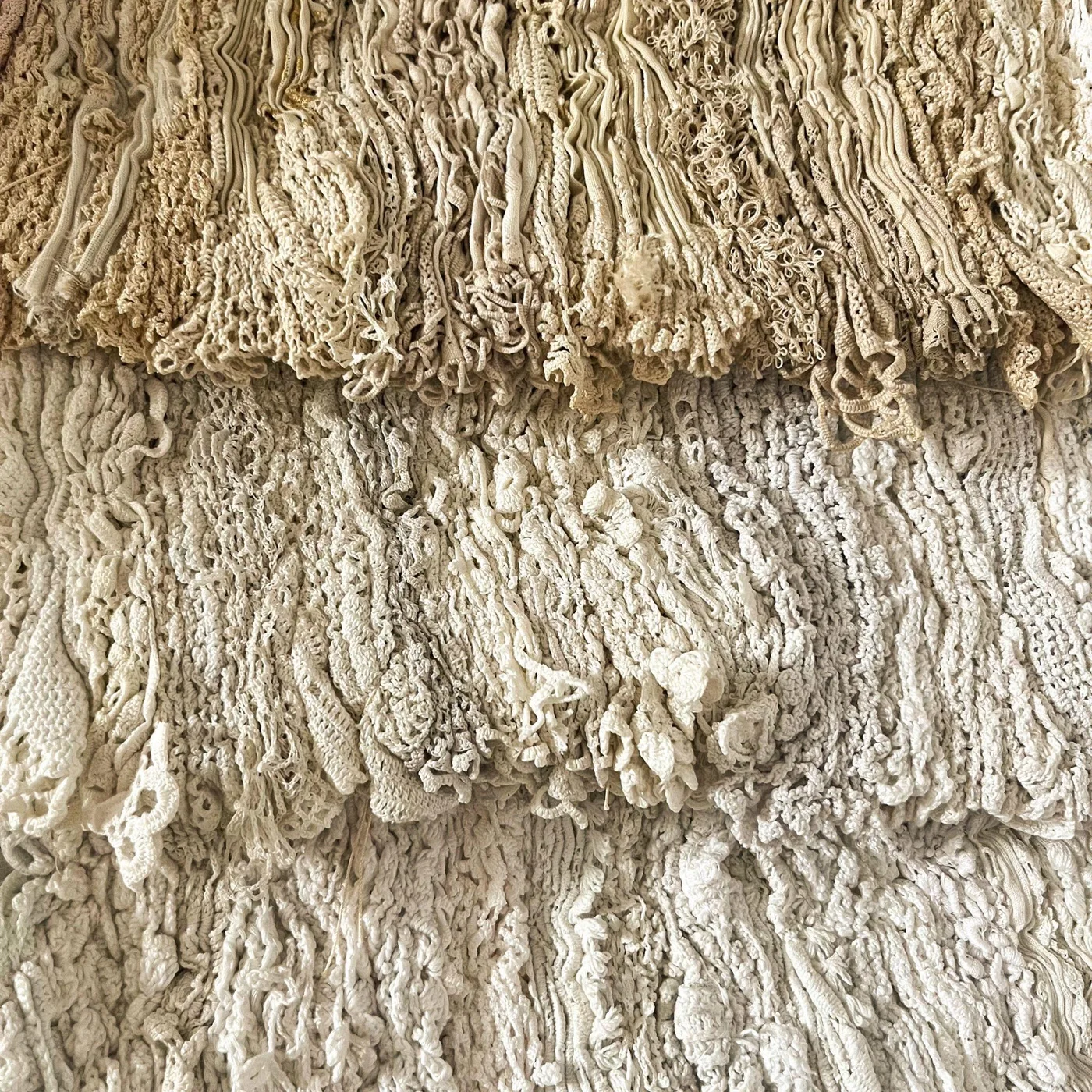
The act of repetition remains important to me. A stitch is small and precise, but thousands of stitches can alter the character of an entire surface. The same is true of drawing and sculpture: individual decisions accumulate until a structure begins to emerge. The process is therefore not simply a means of arriving at an object. It is through the accumulation of these decisions that the work begins to reveal what it might become.
The Meditative Rhythm of Repetition
There is a meditative dimension to textile-making that has remained important to my understanding of these practices. The repetitive and rhythmic movement of knitting, stitching or weaving creates a particular relationship with time. The attention required by each movement can become absorbing, allowing the maker to enter a quieter state of concentration.
In Threads of Timeless Tales, I explored this through the relationship between textile creation and the concept of the void. I was interested in the possibility that repetition could create a temporary space removed from the noise of everyday concerns: a space for introspection, daydreaming and self-discovery. The repetitive action does not necessarily lead to emptiness, instead, it can open another kind of mental space in which thought is allowed to wander.
This aspect of textile-making also creates a tension with its history as labour. The same repetitive movements that can produce a meditative state have also been part of women's domestic work, performed repeatedly and often without recognition. In my research, I became interested in holding these two possibilities together: textile as labour and textile as sanctuary, as obligation and as a space for thought.
Perhaps this is one reason I remain drawn to the slowness of textile processes. In a practice increasingly concerned with sculpture and materials such as steel and concrete, the deliberate pace of stitching or knitting introduces another understanding of time. A work can demand duration not only from the material, but from the person making it.
The meditative quality of textile therefore sits alongside its histories of labour, memory and communication. The repetitive gesture can be both physical and psychological, creating a rhythm through which the maker moves between concentration and reflection. In this sense, the act of making becomes as significant as the object that eventually emerges from it.
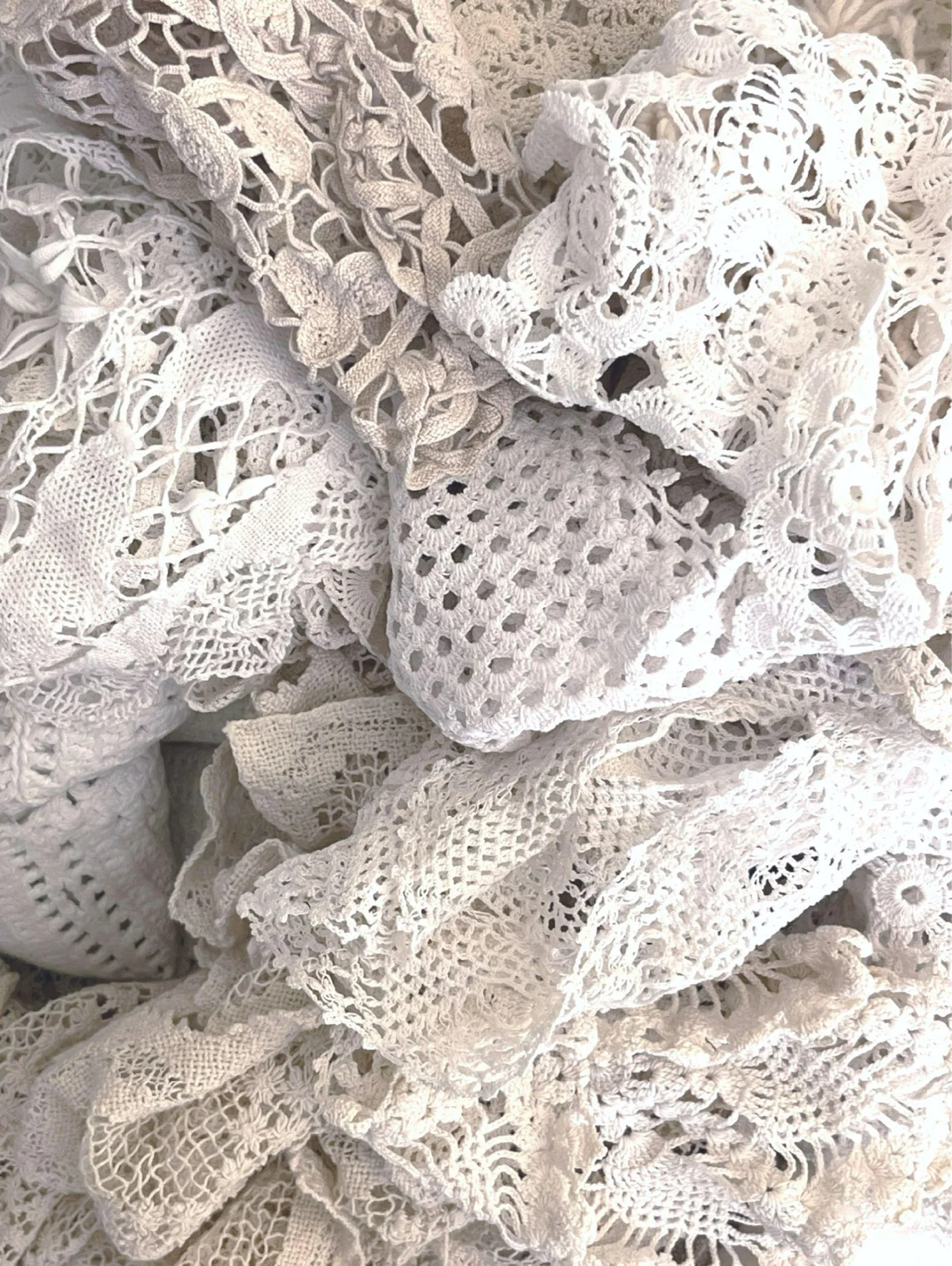
My experience of textiles has also always been connected to other people. My grandmother described making a knitted tablecloth together with her friends, meeting for coffee, talking and working through the same demanding pattern. The process was social as much as it was manual.
This is where the meditative and communal qualities of textiles meet. A thread can draw attention inward, while the act of making can simultaneously create a connection between people. Both experiences remain present in the way I think about textile today.
When the Work Begins to Change
My materials also allow the work to move beyond the conventional boundaries of textile. Alongside thread and fabric, my practice has developed through materials such as wire, steel and concrete. Their weight, rigidity and physical presence introduce another register into a practice that began with materials traditionally associated with softness and domestic making.
This movement between materials is part of an ongoing investigation rather than a fixed formula. I am interested in what is retained when a material is removed from its expected context, and what becomes possible when materials with very different histories occupy the same work.
For this reason, the unfinished state of a work can be important. It leaves visible the possibility of change. A material may still be carrying the evidence of the process through which it was made; a form may still suggest another form; a decision can remain open.
I do not think of the studio as a place where ideas are simply executed. It is where ideas are tested against materials. Some possibilities disappear through making, while others become more insistent. The physical properties of a material can resist an initial intention and, in doing so, redirect the work.
This is why I return to certain materials and processes. They allow me to continue asking questions rather than arriving too quickly at an answer.
A work in progress is therefore a state of attention: a space between intention and discovery, where material, memory and form are still negotiating with one another.