Inside the works
Pigments Within Textile Sculpture: Soft Chamber, Threaded Keep, Silent Cocoon
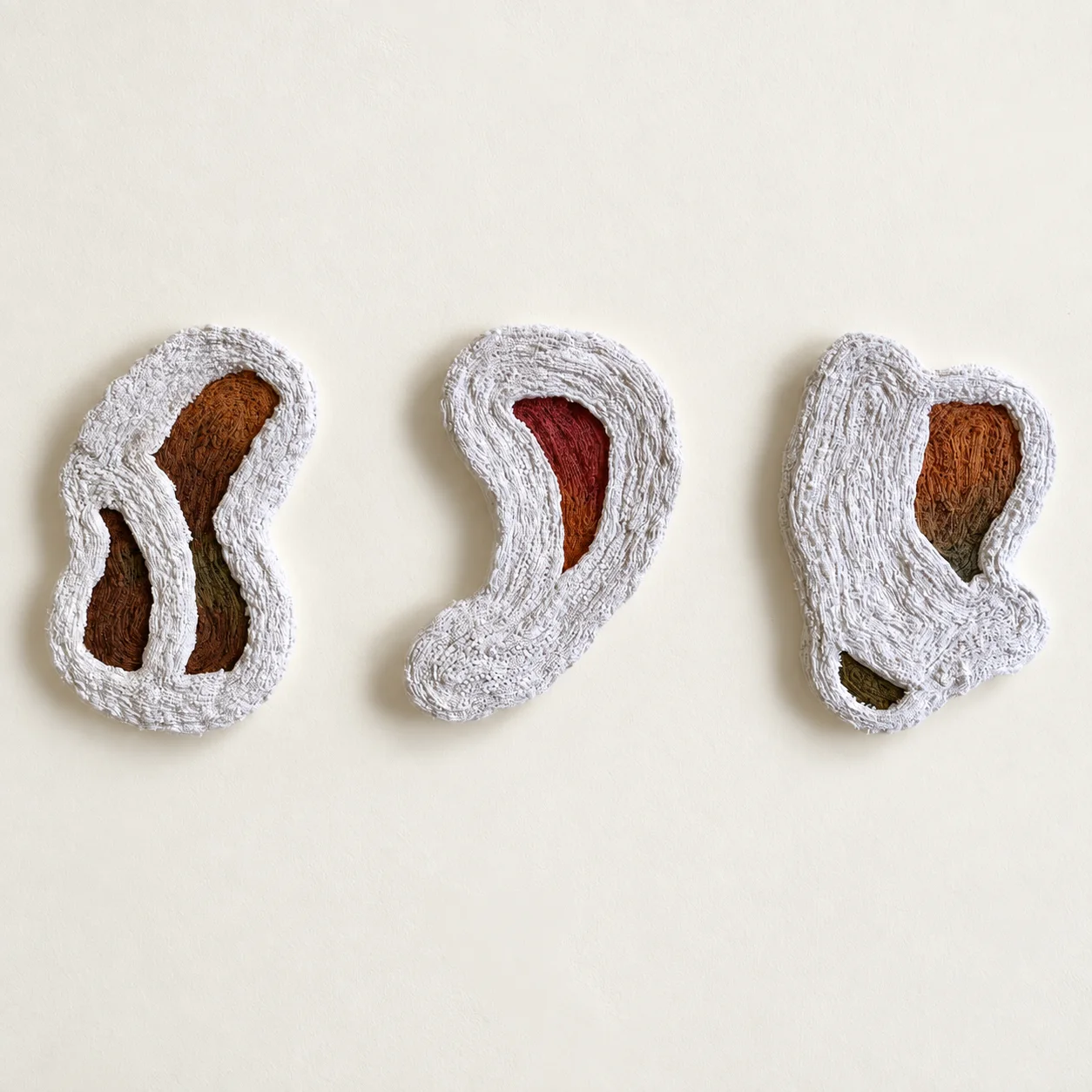
Colour has always been part of the language of textiles. It can be carried through thread, absorbed into fibre, woven into a structure or developed through repeated gestures of making. In Soft Chamber, Threaded Keep and Silent Cocoon, I work with reclaimed crocheted textiles, including semedakia and lace, together with thread, beads and natural pigments.
I refer to these works as vessels. Their forms create an interior and exterior, folding around and holding space while remaining rooted in my research into textiles.
Reclaimed textile
The semedakia, small decorative textiles found in Greek homes, bring an existing history of making into the work. Crochet belongs to the domestic textile practices I encountered through my research, alongside embroidery, knitting and the repair of clothing. Their structures carry the repetition and labour through which they were made.
I am interested in retaining this history while changing the conditions of the textile. The crochet is joined, folded and stitched into new forms. Its existing patterns and openings become part of the construction, allowing the textile to move from surface into volume.
Pigment and fibre
I use natural pigments to introduce colour into these structures. Pigment has a different physical presence from fibre: it can settle within openings, occupy recessed areas and create gradual changes in density against the lighter textile.
I am interested in this relationship between fibre and pigment. The repetition of the crochet establishes a rhythm, while colour can interrupt, emphasise or deepen that structure. The pigment becomes part of how the vessel is formed and encountered.
The areas of pigment sit within the textile structures, drawing attention towards their interiors. Colour becomes connected to the spatial qualities of the vessel, its folds, openings and enclosed areas.
Textile as structure
My interest in these forms began partly through research into natural shelters such as cocoons and the intricate structures through which they create enclosed spaces. I was drawn to their delicacy and complexity, but also to the way a seemingly fragile material can form a protective structure.
This led me back to the structures already present in crochet and lace. A repeated stitch can become a surface, an edge, an opening or a volume. The textile can become architectural without losing its identity as textile.
This also connects to the histories of women’s textile labour that inform my practice. Textile-making has often been associated with domestic work that was repetitive, skilled and necessary, yet frequently overlooked as artistic production. The semedaki carries this history into the vessel.
Colour within the form
In these works, colour is inseparable from the textile structure. Its relationship to fibre, openings, folds and depth changes the way the vessels are encountered.
The reclaimed semedaki retains traces of its previous life, while the introduction of pigment shifts the material into another context. The textile, pigment and sculptural form remain connected: one material does not simply support the other, but each changes how the work is experienced.
This is what interests me in working with reclaimed textiles, the possibility of allowing an existing material history to remain present while giving it another form.