Memory
Greek Textile Traditions: From My Grandmothers’ Hands to My Own
Long before textiles became part of my artistic practice, they were part of my family life.
My relationship with embroidery, knitting and crochet began with my grandmothers in Greece. I was introduced to these techniques as a child, through the ordinary rhythm of spending time together, learning how something was made, trying it myself, making mistakes and trying again.
I remember receiving my first embroidery kit from my grandmother when I was around six. What stayed with me was not only the excitement of making something, but the experience of being taught.
Textile-making became connected to time spent together.
It was something that could happen while talking, laughing or simply sitting beside one another.
One of my grandmothers once told me about a knitted tablecloth she had made with her friends. They had all followed the same difficult pattern and turned the process into a small competition, meeting to knit, talk and count their stitches together.
Looking back, I realise that these experiences shaped the way I understand textiles.
They were never only objects. They were also records of time, relationships, knowledge and labour.
From learning techniques to making art
As I grew older, I continued to learn different textile techniques. I made things, repaired clothes, altered them and experimented with what I had been taught.
Eventually, these familiar materials began to enter my artistic practice.
The shift was not about abandoning the traditions I had inherited. It was about looking at them differently.
I became interested in what happens when techniques associated with domestic life are taken into an artistic context.
What happens to a piece of textile when we begin to look at the labour behind it? Who made it? Who taught them? What knowledge has travelled through the hands that produced it? And what happens to all of that knowledge when the object survives but the person who made it is no longer there?
These questions became increasingly important to my research.
Textiles, women and memory
During my studies at the Royal Academy of Art, The Hague, I began researching the complex relationship between women and textiles.
My graduation project, Threads of Timeless Tales, grew from this research. The project brought together textiles, drawing and installation while looking at women's relationship with textile-making through mythology, history, literature and contemporary feminist thought.
The research also brought me back to the women who had introduced me to textiles in the first place.
My grandmothers became more than a personal point of reference. They became part of a much larger history of women learning, making and passing knowledge between generations.
The techniques I had encountered at home were connected to a broader and universal culture of textile production and domestic making.
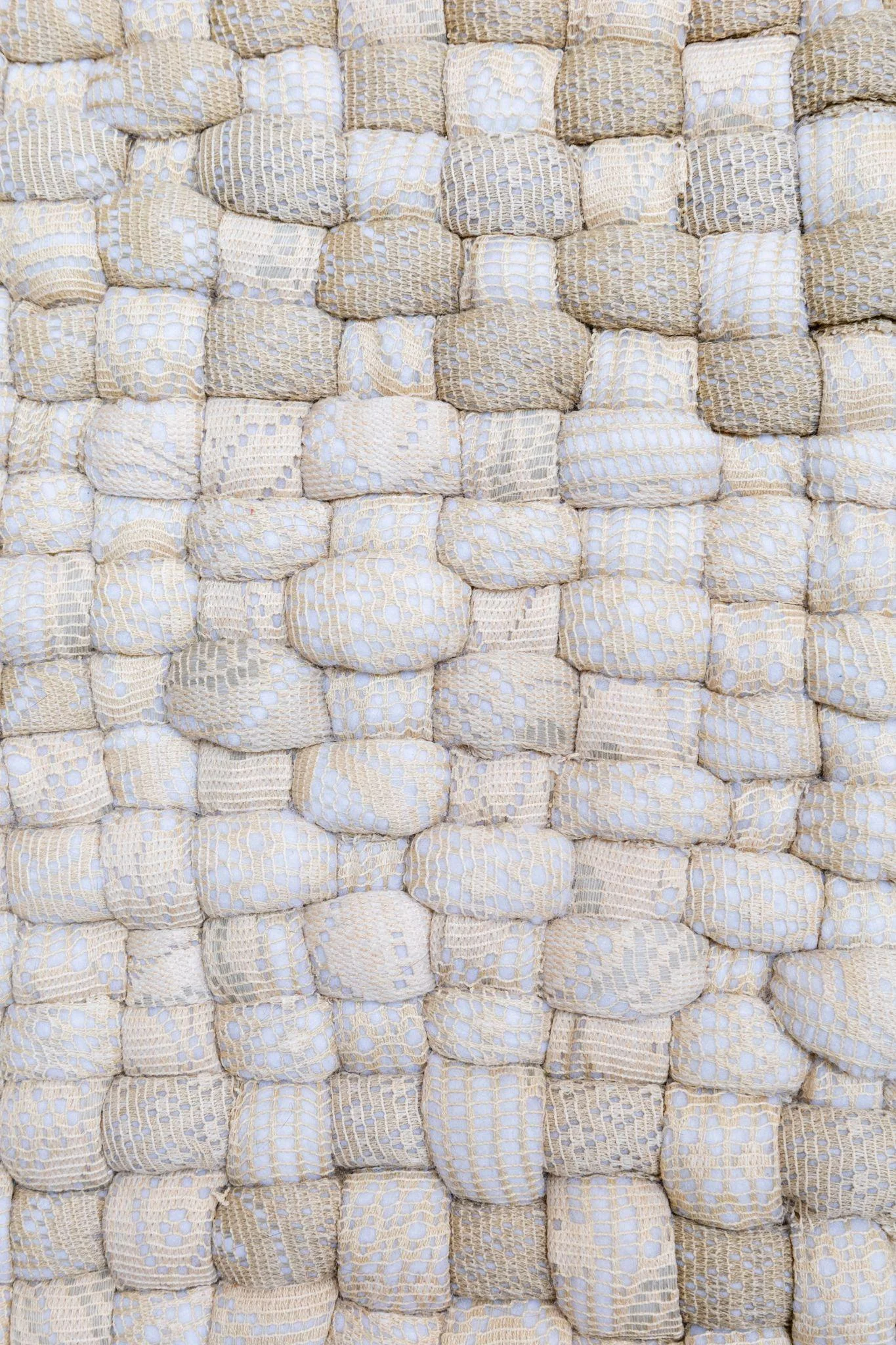
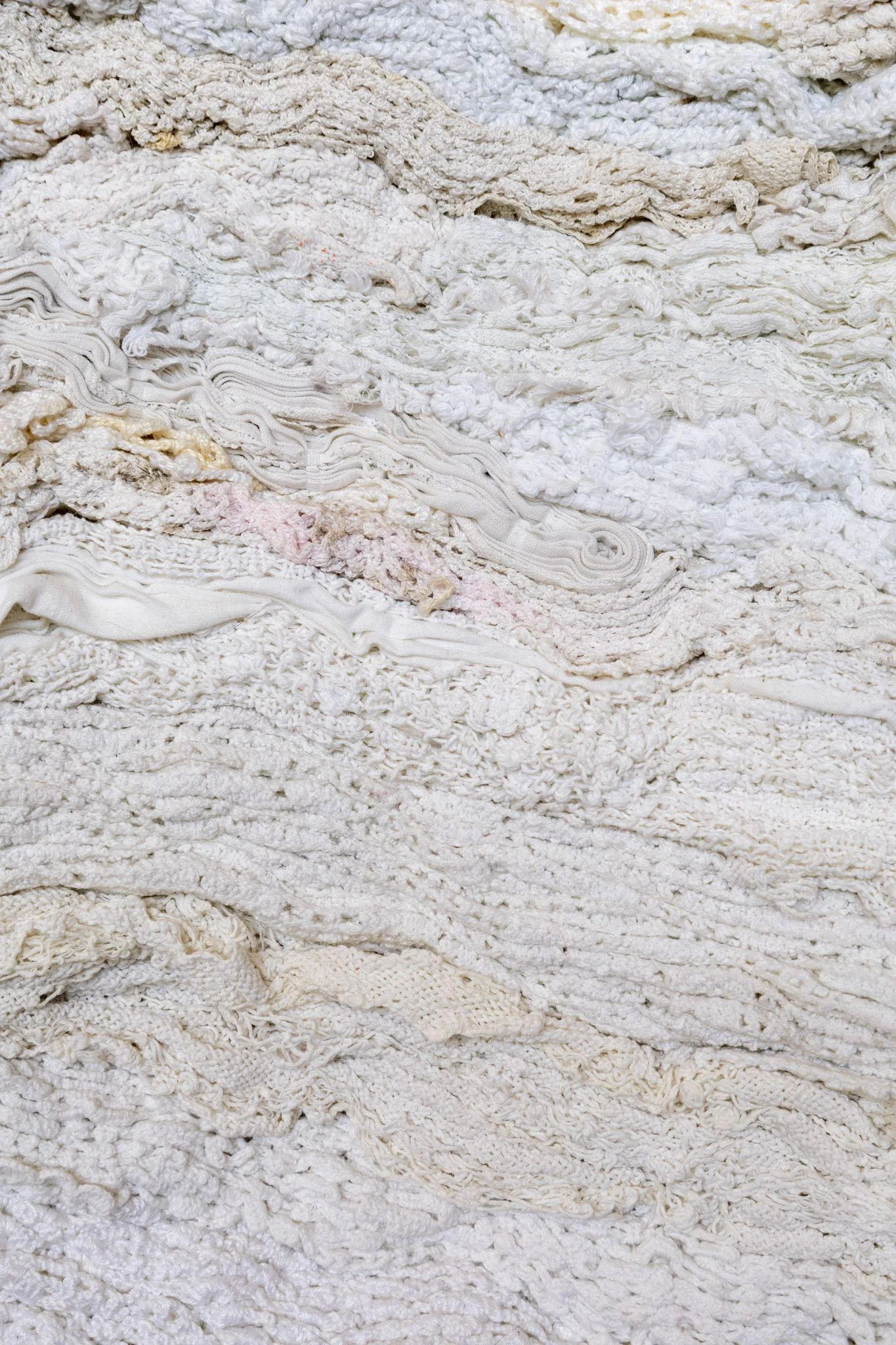
In Greece, this includes traditions surrounding handmade textiles such as semedakia, crocheted or knitted lace pieces that were made, used and displayed within the home. My research into these traditions became part of my understanding of the relationship between textiles, women's labour and cultural memory.
What remains in my work
My practice has developed considerably since those early experiences.
I now work across textiles, drawing and sculpture and I have increasingly brought together materials such as textile, steel and concrete. My current work continues to explore the relationship between material traditions, memory and the histories embedded within objects.
But the connection to those first experiences remains.
The knowledge I inherited through is not something I simply reproduce.
I utilise, transform and translate it into a research and topic that is universally understood by women and makers.
A technique can become a drawing.
A domestic textile can become part of a sculpture.
A familiar material can become unfamiliar.
A memory can become a physical object.
This transformation is important to me because I am interested in what happens when something inherited is carried into a new context but still secures its past history.
The hands behind the objects
When I think about my relationship with textiles now, I often return to the idea of the maker.
Behind every handmade textile is someone's time.
Someone counted the stitches.
Someone repeated the movement.
Someone learned the technique from another person.
Someone decided to keep making.
For me, this is where the personal and the historical meet.
My grandmothers gave me my first understanding of textiles, but they also introduced me to a way of thinking through making.
That continues to be part of my practice today.