Inside a work
Hestia: Lace, Steel and the stories of a Home.
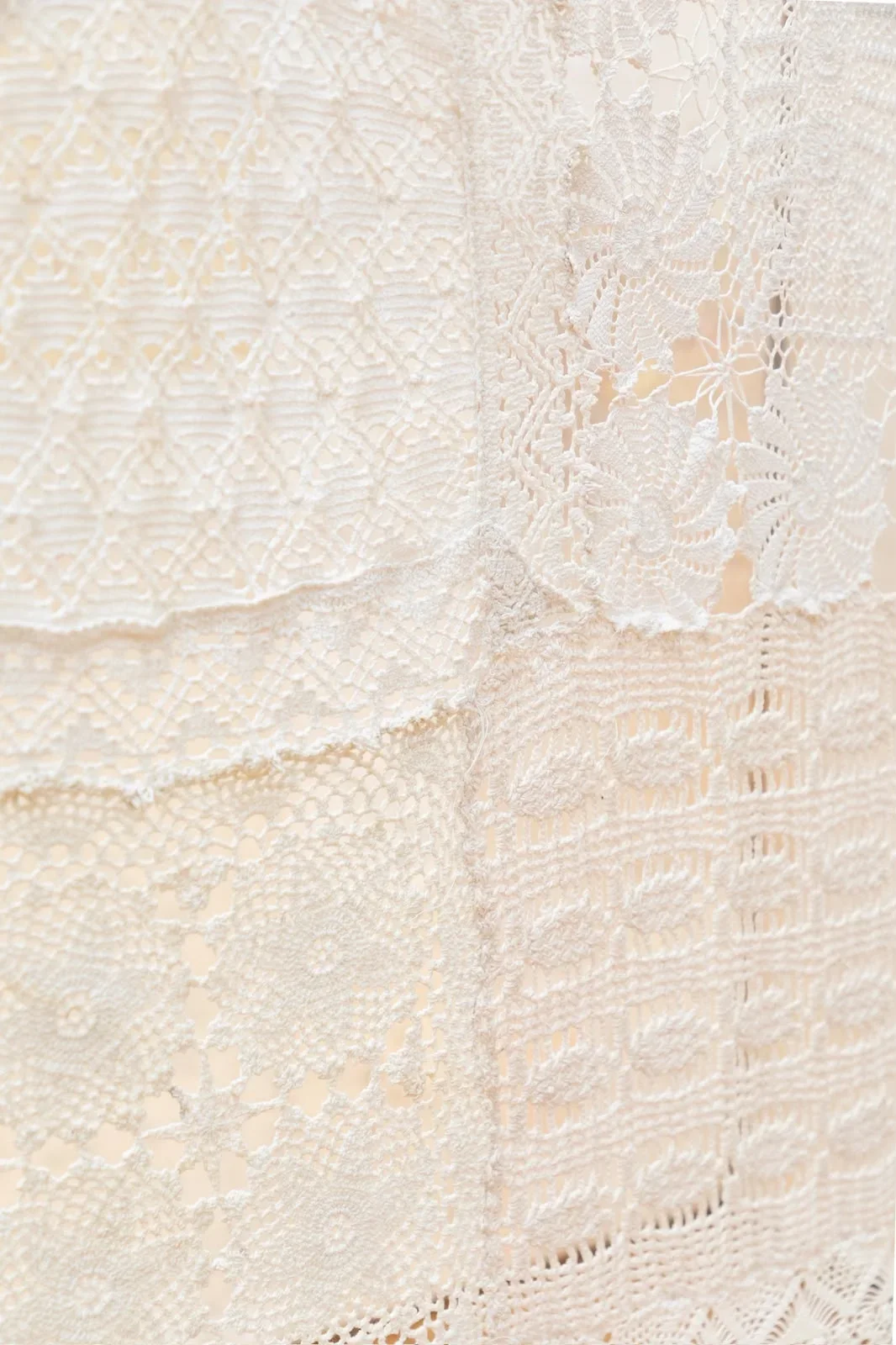
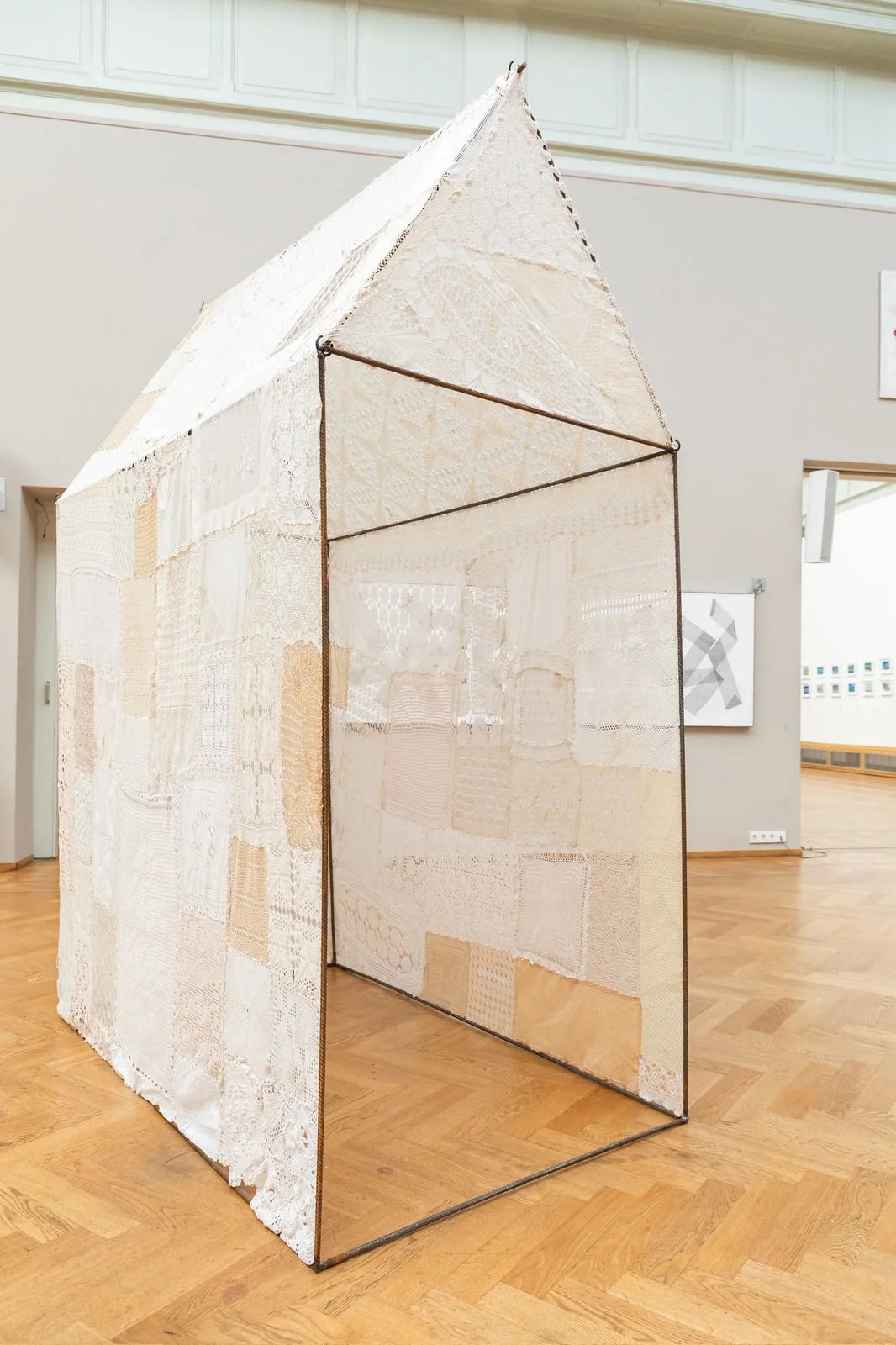
Hestia brings lace, semedaki fabrics, thread and rebar steel together in a structure measuring 250 × 150 × 250 cm. The work takes the form of a house, but its walls remain open. Handmade lace occupies the steel framework without fully enclosing it, allowing the surrounding space to remain visible through the textile.
The work takes its name from Hestia, the ancient Greek goddess of the hearth and home. Hestia was associated with the domestic hearth but also with the civic hearth, placing her at the centre of both household and communal life. The hearth was a place of warmth, gathering, nourishment and continuity.
I am interested in this idea of the home as something held together through care and labour. In ancient Greece, weaving and the management of the household were among the principal responsibilities associated with women. The textile histories that inform my practice emerge from this long relationship between women, domestic work and the making of the spaces in which life takes place.
Lace as architecture
In Hestia, lace takes on an architectural role. Traditionally associated with the surface of a textile, it becomes part of a larger structure, suspended within the steel framework of the house.
The steel establishes the architectural outline, while the lace interrupts its solidity and also holds the house together. The house can be seen through rather than simply looked at. Its walls suggest enclosure without completely enclosing. Its structure is present but remains permeable.
This relationship between lace and steel is important to the work. They carry different histories of making and different physical qualities, yet here they become part of the same structure. One establishes the framework and the other reclaims it and occupies it.
The hands that build
The work is also connected to the histories of women whose labour has formed and maintained domestic spaces without necessarily being recognised as a form of authorship.
In this body of work, I think of homes whose foundations are laid through crochet knots. This image moves between the hands of an unnamed grandmother, woman and maker, and the concrete and metal bars that form the foundations of contemporary structures.
This relationship between the textile and the architectural is at the centre of Hestia. The lace is delicate, but it is not passive. Within the steel framework it becomes part of the construction of the house.
A house that remains open
As goddess of the hearth, Hestia was associated with a centre of everyday life, within the home and, in the civic sphere, within the community.
I think of Hestia through this sense of the centre rather than the monument. The house is recognisable, but it is not solid. It has no conventional walls, no enclosed rooms, no roof that completely separates inside from outside.
Instead, textile creates a permeable boundary.
The work remains between sculpture and architecture, between domestic textile and constructed space. The steel gives the house its skeleton, while the lace gives it a surface that can be entered by the eye. Together they create a structure that speaks of home, security, past stories and resilience.