Lace & materials
Lace in Contemporary Textile Art: Working with Reclaimed Fabrics
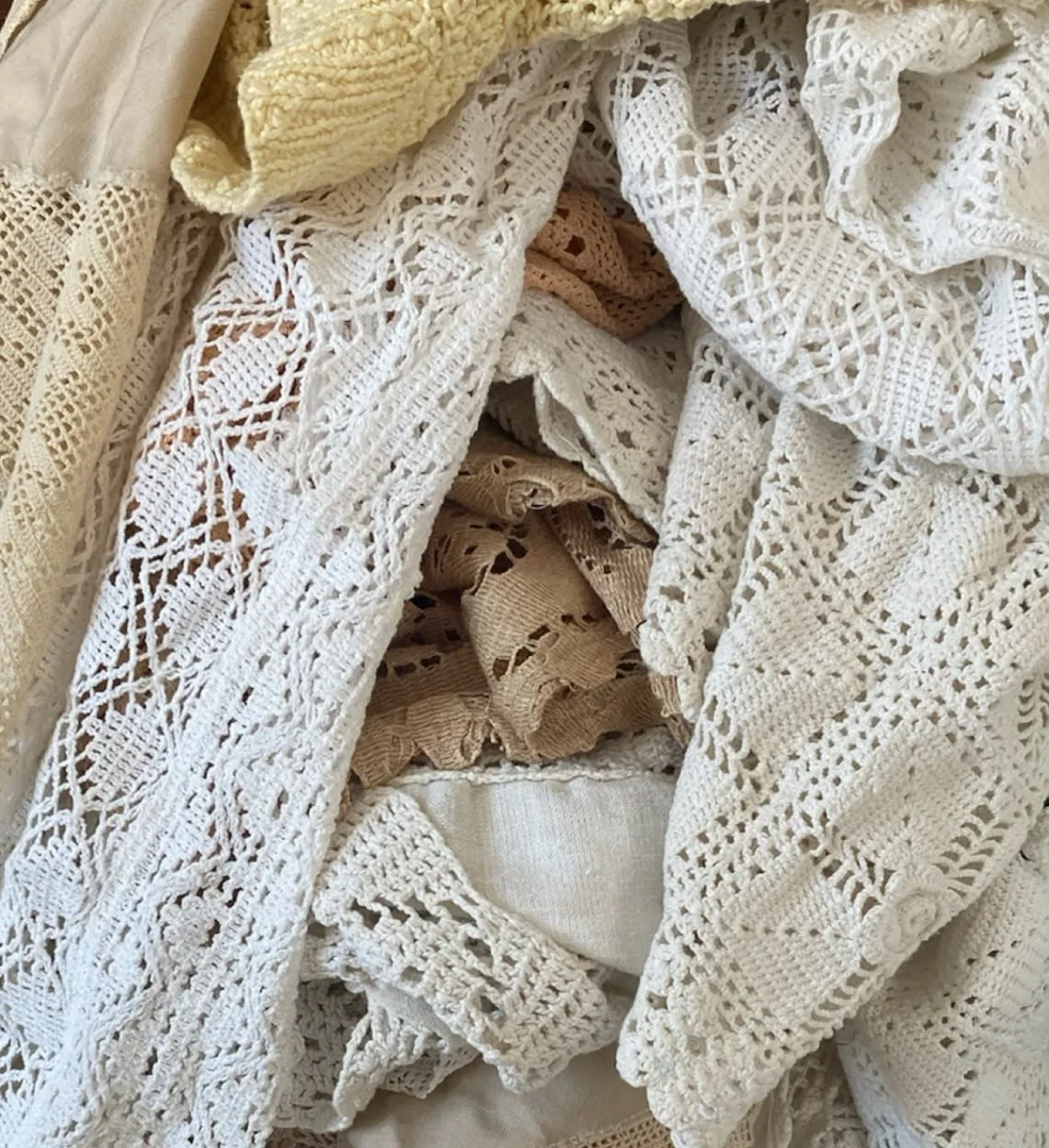
In my practice, lace is both a material and a starting point for thinking about the hands that made it. Reclaimed household fabrics bring texture to a work, but they also bring questions about time, memory and women’s labour.
What changes when lace becomes art?
A familiar domestic textile can be approached in another way when it enters an artwork. Its open pattern, edges and repeated stitches become part of a larger composition. Rather than seeing only its original use, we can begin to notice the structure of the fabric and the work held within it.
My relationship with these materials began with my grandmothers in Greece. Learning embroidery, crochet and knitting was part of spending time together, long before I understood those techniques as part of an artistic practice. That experience still informs how I look at handmade textiles.
Lace and Semadaki fabrics
Handmade lace pieces known as semedakia are part of the Greek domestic traditions that inform my work. Their significance to my work is personal as well as material: they connect the physical act of making with knowledge passed between generations.
Reclaimed fabric is not a blank surface. A pattern, a fold or an edge can already carry associations before it becomes part of a new work. I am interested in allowing something of that earlier life to remain while changing the way the material is encountered.
From a layered surface to a sculptural form
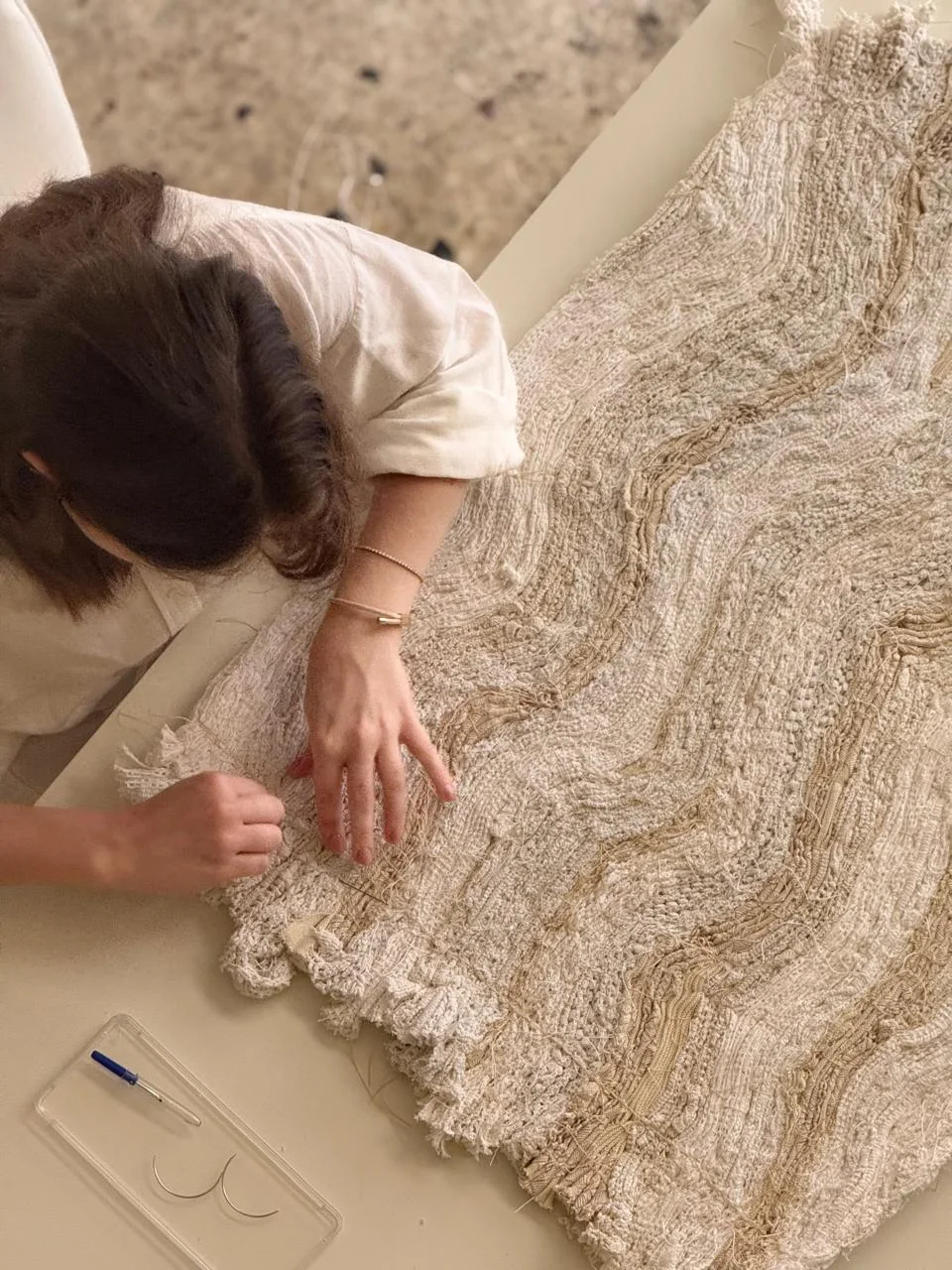
In Stratify, lace and Semadaki fabrics are combined with thread in a work measuring 180 × 100 cm. The layers build a surface that changes as the viewer moves from the whole work to its details.
Soft Chamber takes these materials in another direction. Lace, thread, natural pigments and beads form a smaller sculptural work with layers of dyed and undyed fabrics.
Looking beyond the pattern
For me, the close attention that textile work asks of the hands is part of the subject. Repetition can make a surface, but it can also bring the maker into a particular rhythm of concentration and a meditative state.
My process allows me to hold these thoughts together: the visible pattern, the hidden labour behind it and the possibility of making something unfamiliar from a material that already belongs to everyday life.