Materials
Steel and Concrete in Contemporary Textile Sculpture
My practice is rooted in textiles, but I have increasingly become interested in what happens when textile encounters materials that seem to belong to an entirely different visual and cultural vocabulary. Steel, concrete and metal construction elements have entered my work alongside thread, wool, lace and handmade textiles, creating a dialogue between materials that carry very different histories.
This movement is not a departure from my interest in textile. Rather, it has allowed me to examine it from another position. Textile has traditionally occupied an ambiguous place within the history of art. Techniques such as embroidery, knitting and sewing have been closely associated with women and domestic labour, and have consequently often been separated from the category of fine art. My research has repeatedly returned to this history and to the ways in which women's creative labour has been rendered invisible or culturally undervalued.
I am interested in what happens when these materials are removed from the expectations traditionally attached to them.
Textile and the architecture of labour
The distinction between textile and construction is particularly significant to me. Textile-making is often understood through intimacy, domesticity and the handmade, whereas steel and concrete evoke architecture, infrastructure, industry and physical construction. These associations are also historically gendered.
Bringing them together allows me to question that division.
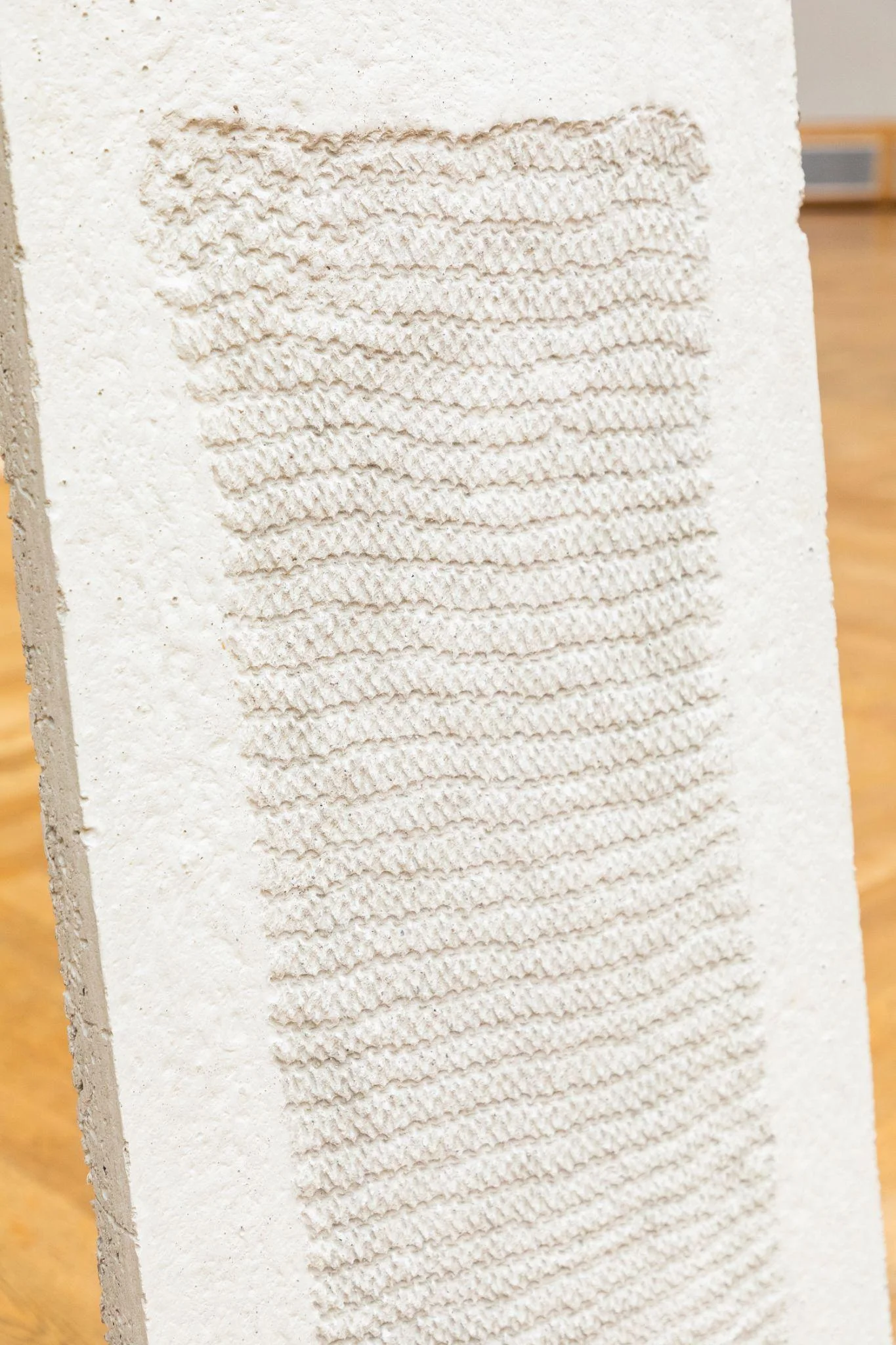
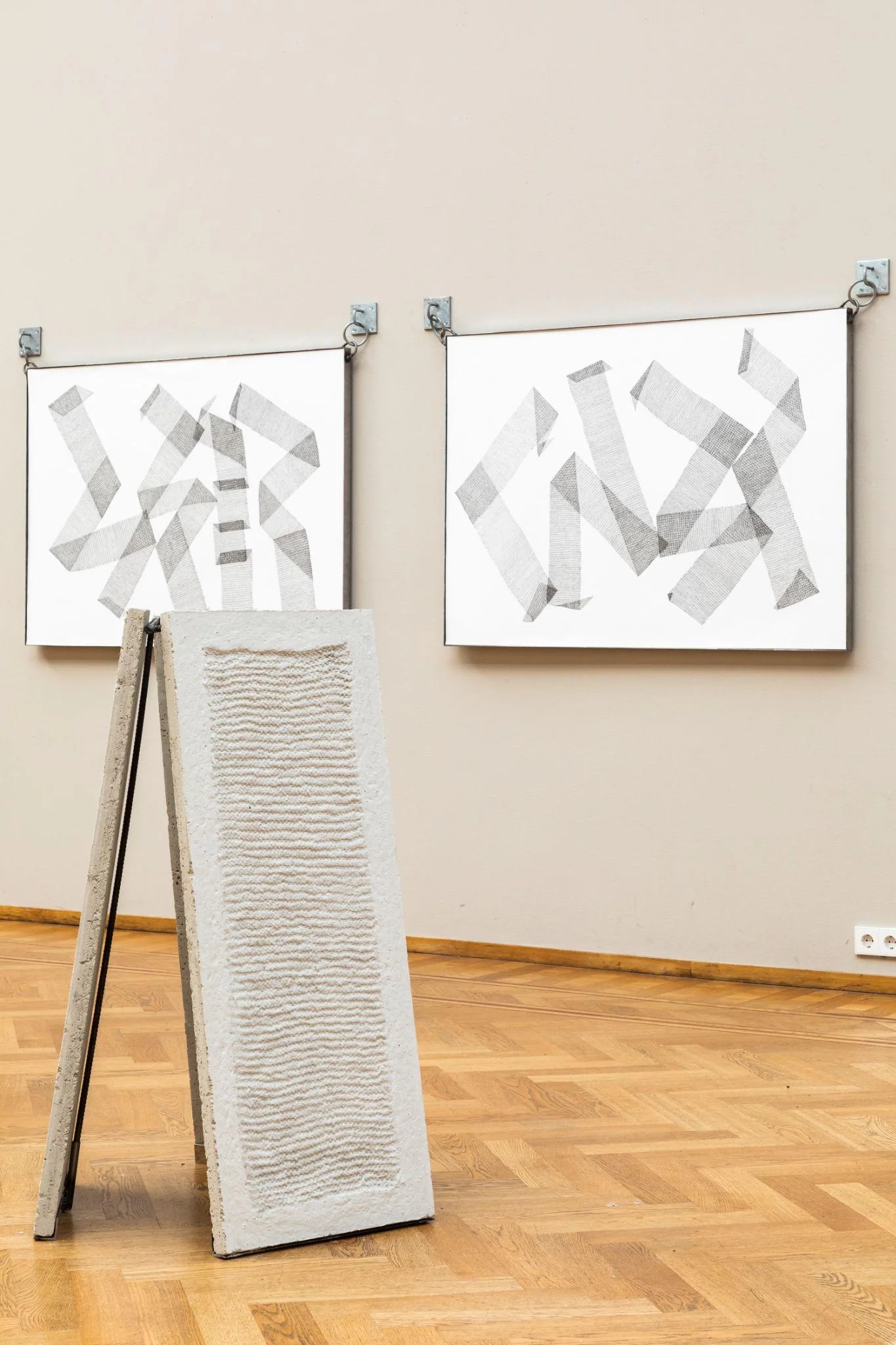
In Threads of Resilience, for example, I used semedakia alongside rebar steel, allowing the delicate structures of crocheted and knitted textiles to exist within a material associated with construction. The work consists of concrete monoliths bearing the imprints and “fossils” of knitted fabrics, so that the textile is not simply placed beside the concrete but becomes embedded within it. I describe these impressions as traces and fossils of textile labour preserved within the structure itself.
This process of imprinting is important to my thinking. The textile is simultaneously present and absent. Its physical structure has disappeared from the concrete, yet its trace remains.
The material becomes a kind of record of the past, a fossil of forgotten labour and stories that I aim to bring to light.
Concrete as a carrier of memory
Concrete is conventionally understood as a material of permanence. It forms foundations, walls and structures, it belongs to the built environment and to the language of construction.
I am interested in using that sense of permanence to think about histories that have not always been preserved with the same visibility.
The labour associated with women's textile-making is often intimate and repetitive. It takes place through countless small gestures: stitching, knotting, counting, looping and repeating. These gestures accumulate over time, yet the labour itself can become invisible once an object is completed.
By transferring the traces of textile into concrete, I am interested in reversing this relationship. Something associated with domestic and often overlooked labour becomes embedded within a material of structural permanence.
The textile becomes part of the foundation.
Between softness and solidity
There is also a physical contradiction between the materials that interests me.
Wool, lace and crocheted fabric respond to the body. They bend, fold and retain the traces of touch. Concrete resists these qualities. It is dense, rigid and materially imposing.
Rather than resolving this opposition, I want the tension between them to remain perceptible.
This is also present in Concrete Hestia, part of Threads of Timeless Tales. The work brings concrete and fabric together, connecting the material traces of textiles with Hestia, the ancient Greek goddess of the hearth. The textile is impressed into the concrete, creating a relationship between domestic space, women's labour, cultural memory and the physical foundations of the work.
The use of Hestia is significant because the hearth has historically occupied a complicated position: it can signify warmth, protection and community, but also the confinement of women within the domestic sphere. Through the material language of the sculpture, I am interested in allowing these associations to coexist rather than reducing them to a single interpretation.
Materials and gender
My choice to work with concrete, steel and other construction materials is also connected to the gendered histories surrounding materials.
Textile techniques have frequently been categorised as women's work, while heavy industrial labour have historically been coded as masculine. These associations are an important part of my own research into the position of textiles within contemporary art.
I am interested in what happens when these categories are placed into direct conversation.
The intention is not simply to oppose the feminine and the masculine, or to replace one material hierarchy with another. Instead, I want to expose the assumptions that have shaped the way we understand materials, labour and artistic value.
A crocheted textile can possess structural presence. Concrete can carry an intimate history. Steel can become part of a language of weaving.
From textile into sculpture
I continue to think through textile processes, repetition, accumulation, pattern, structure and the physical act of making, but I am interested in allowing these processes to exist beyond the textile object itself.
Metal Weave, for example, translates the language of weaving into steel. The material is no longer soft, yet the structure retains the logic of interlacing and repetition.
For me, this is not about imitating textile in another material. It is about asking what remains when the material changes.
What is left of a textile when the thread becomes steel?
What happens when a domestic gesture becomes structural?
And what happens when the trace of a handmade object becomes embedded in something that appears permanent?
These questions continue to shape the movement of my practice between textile, drawing and sculpture.
The materials may change, but the histories they carry continue to inform the work.